
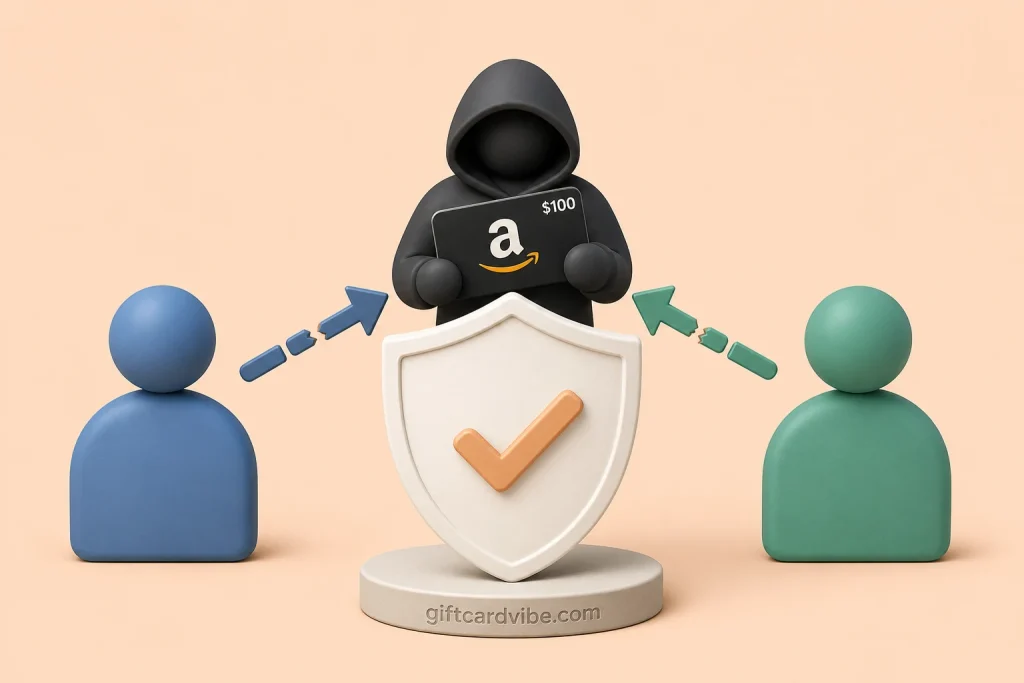
Quick answer: a middleman gift card scam places a fraudster between a real seller and a real buyer. Each victim may believe they are dealing directly with the other person. The fraudster controls the chat, swaps account details or card instructions, collects the code or payment, and leaves the two genuine parties blaming each other.
How the two-sided scam works
- The scammer finds a person selling a gift card and separately finds a person who wants to buy one.
- The scammer tells the seller, “my customer will pay you,” while telling the buyer, “my supplier will send the card.”
- The buyer receives bank details belonging to the seller, so the payment can look genuine.
- The seller sees money arrive and sends the code to the scammer, not to the person who actually paid.
- The scammer redeems or resells the code. The buyer receives nothing and may report or reverse the payment.
A variation uses a fake escrow agent or respected group administrator. Another uses a compromised social account, so the “middleman” appears to be someone both parties know. The technical detail changes, but the separation of identity, payment, and delivery remains the core weakness.
Why normal checks can miss it
Money arrived in the seller’s account
What may actually be happening: A different victim sent it for another promised transaction
Better check: Match the sender name, purpose, amount, and order reference directly.
The middleman shows both sides of the chat
What may actually be happening: Screenshots are cropped, edited, or from separate conversations
Better check: Communicate with the payer through a channel you independently verify.
A known admin recommends the deal
What may actually be happening: The admin account may be impersonated or compromised
Better check: Confirm through the admin’s established contact method.
The buyer and seller agree on value
What may actually be happening: They may be describing different cards, fees, or recipients
Better check: Use a shared order record with exact card and settlement terms.
Three questions that expose the setup
Who owns the paying account?
Ask why that person is paying, what they expect to receive, and how they can be contacted. A vague answer such as “my client” is not enough for an irreversible transaction. Never assume a third-party payment is harmless.
Who will receive the card?
The person paying and the person receiving should be linked by a documented order. If the card is being delivered to a different username, phone number, or platform account, pause and verify.
Can both parties confirm one reference?
Use a unique order reference and a plain-language description: brand, country, amount, format, final Naira settlement, and recipient. The payer should confirm those details directly, not through forwarded screenshots.
Safer transaction designs
- Use an established platform where the account, submission, quote, review, and payout exist in one authenticated order.
- Decline unrelated third-party payments unless the platform explicitly supports and records them.
- Do not move from a marketplace or app to a new WhatsApp number at the request of an “agent.”
- Never use a group administrator as informal escrow without a written, verifiable process.
- For business transactions, issue an invoice naming the payer and service instead of accepting unexplained transfers.
If you are already between two angry parties
Stop sending further value. Preserve the complete chats, account URLs, usernames, phone numbers, card images, receipts, order times, bank statements, and transaction references. Do not edit screenshots or delete messages. Tell your bank that the incoming or outgoing transfer may be connected to fraud and follow its instructions.
Contact the card issuer quickly if a code was exposed. Report the social accounts in-app. Nigerian users can submit evidence to the NPF-NCCC e-reporting portal. If a business failed to resolve a consumer complaint, the FCCPC complaint process explains how to attach correspondence and transaction documents.
A practical example
A seller has a $200 Apple card. “Agent A” says Buyer B will transfer Naira directly. Buyer B is told the payment is for a phone, not a gift card. The seller receives the exact amount and releases the Apple code to Agent A. Buyer B never receives a phone and reports the transfer. The seller had real money in the account, but the payment narrative and delivery recipient never matched. One direct confirmation with Buyer B would have exposed the conflict.
Middleman scam FAQ
Is using a middleman always a scam?
No, but an informal middleman creates identity and custody gaps. Use only a documented service whose role, fees, account, and dispute process can be verified.
Why can a genuine bank transfer still be risky?
The money may come from another victim who believes they are paying for something else. Confirm the payer, purpose, order reference, and recipient.