
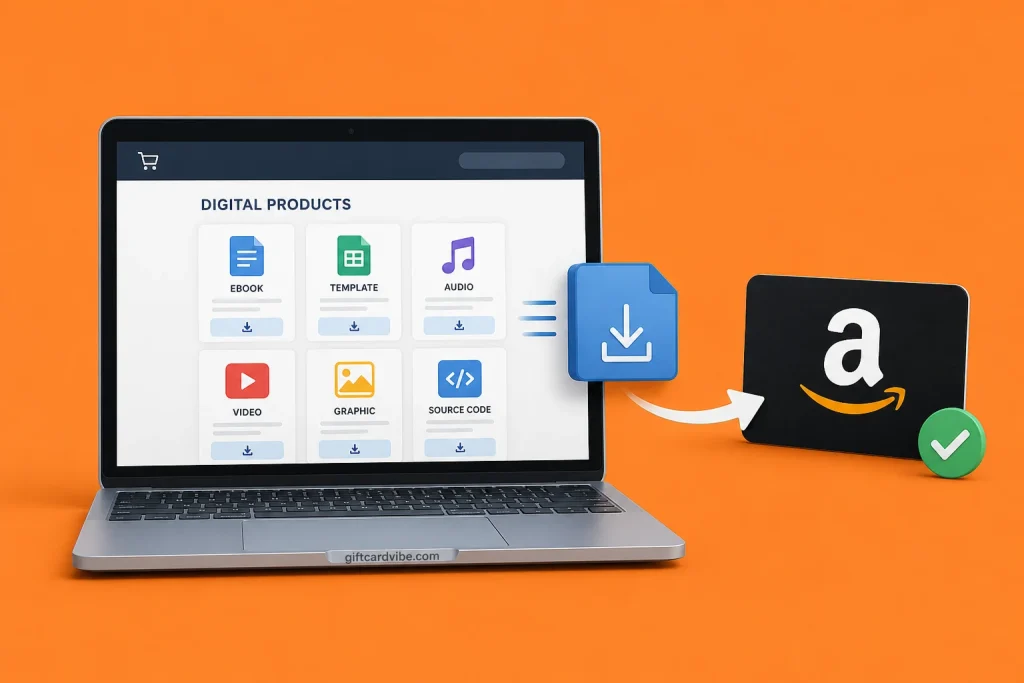
Quick answer: an Amazon gift card is a poor default payment method for client work because it is marketplace-specific, difficult to reverse, and may be restricted from resale or transfer for value. Prefer a normal invoice and cash payment. If a legitimate client proposes a gift, identify the Amazon marketplace and read its terms before agreeing.
Define the digital product first
Use a written scope for templates, presets, icons, guides, code components, or licensed media. State the file format, device or software compatibility, license, revision count, delivery date, and refund conditions. Avoid selling copied courses, pirated assets, cracked software, account access, or material you do not have rights to distribute.
Price in money, not in gift-card face value
Quote the service in USD, GBP, EUR, or Naira, then describe any non-cash settlement separately. A “$100 Amazon card” can have a lower or uncertain Naira resale value depending on country, receipt, format, demand, and platform review. If the client is paying a premium to compensate for this risk, write that into the agreement.
| Agreement item | Example of a clear term |
|---|---|
| Product price | US$80 equivalent |
| Proposed gift | Amazon.com US e-code, delivered from the retailer |
| Evidence | Original order email and purchaser receipt retained |
| Risk allocation | Client replaces a code that the retailer confirms was not activated |
| Delivery | Watermarked preview first; final files after verified settlement |
Marketplace is part of the product
An Amazon.com card is not automatically usable on Amazon.co.uk or another Amazon store. The printed domain, country, and currency matter. Amazon’s UK gift card terms, for example, limit redemption to eligible purchases on Amazon.co.uk and list restrictions on resale, transfer for value, and cash redemption. Check the terms for the exact marketplace rather than assuming one global rule.
Official reference: Amazon.co.uk Gift Card Terms.
Use a staged delivery
- Confirm the client’s identity and business purpose.
- Approve a written brief and price.
- Send a low-resolution or watermarked preview.
- Verify payment through the agreed official channel.
- Release final files and license documentation.
- Keep the acceptance and delivery record.
Do not open a file called a “payment verifier,” share your screen, or log into an Amazon account through a client-supplied link.
Know when the request is a scam
- The client asks you to buy gift cards or return an “overpayment.”
- The offer is much larger than your price and must be completed immediately.
- The sender refuses an invoice but demands the final files first.
- The code arrives as a cropped screenshot from an unrelated person.
- The client asks for another card to activate or release the first one.
The Amazon Pay scam guide warns against using Amazon gift card claim codes as payment to third-party merchants and against off-site payment pressure.
If you still accept the gift
Keep the original retailer delivery, check the exact marketplace, and do not forward the code to multiple buyers. Compare the correct country on the Amazon rate page and treat the calculator result as an estimate. Confirm the final Naira payout and platform policy before exposing the code.
Better payment alternatives
For repeat clients, use an invoiced bank transfer or a regulated payment provider available to both parties. The best method depends on country, fees, tax and documentation needs, so agree it before work starts. Gift cards are better treated as occasional gifts than as an invisible payroll system.
Amazon payment FAQ
Can a client legally pay me with an Amazon gift card?
Rules depend on the card marketplace, local law, and the issuer’s terms. Some Amazon terms restrict resale or transfer for value. Read the exact terms and obtain professional advice where needed.
Is a $100 Amazon card worth $100 in Naira?
Not necessarily. Country, format, receipt, demand, and platform review affect resale value.
Should I deliver the final product after seeing the code?
A visible code does not prove activation or lawful ownership. Use a written milestone and verify settlement under the agreed process.
What is the safest default?
Use a normal invoice and traceable cash payment. Treat a gift card as an exception with clearly documented risk.