
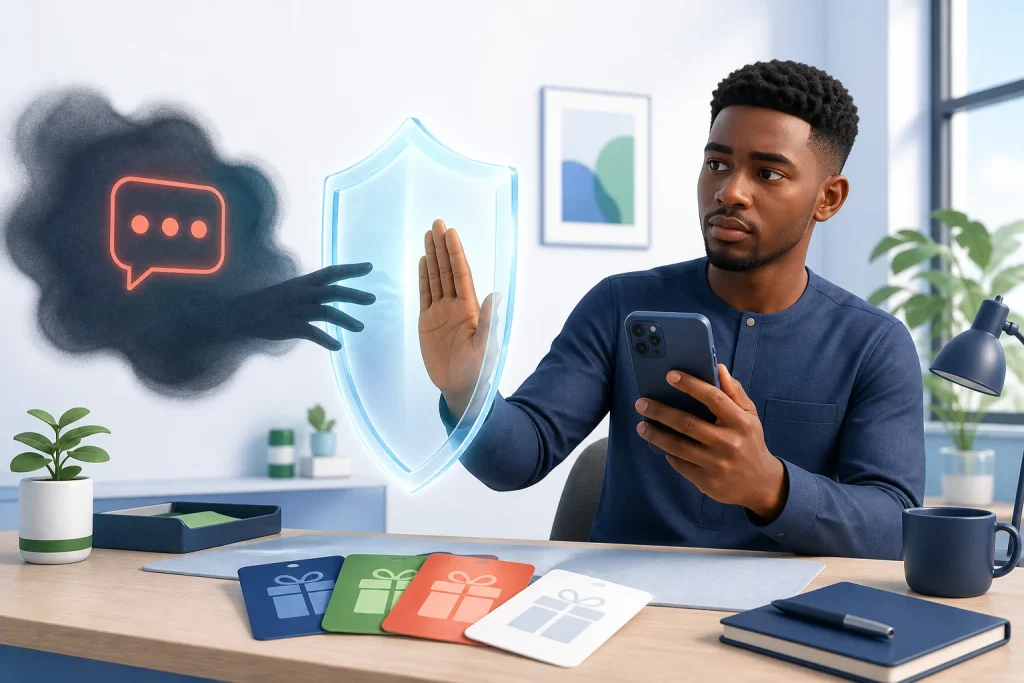
The latest gift card scam warning is less about the story a stranger tells and more about the way they demand payment.
In July 2026, the US Federal Trade Commission (FTC) reminded consumers that an unexpected caller or message sender who insists on payment by gift card, bank transfer, cryptocurrency, or payment app is probably a scammer. Apple had also updated its gift card scam guidance on June 24, explaining that Apple Gift Cards are for Apple products and services—not bills, taxes, immigration fees, debt collection, or payments to another person.
That warning matters in Nigeria because the script travels easily across WhatsApp, Telegram, Instagram, email, and phone calls. The impersonated name may be a bank, delivery company, government office, employer, romantic partner, celebrity giveaway, or gift card vendor. The decisive red flag is the same: you are told to buy a card or reveal its code to solve an unrelated problem.
What is new in the warning?
Scam stories constantly change. Payment behaviour changes much less.
The FTC’s July alert tells consumers to examine how the person wants to be paid. Scammers prefer payment methods that can be moved quickly and are difficult to recover. A demand that you use only one unusual method is therefore evidence, not a harmless preference.
Apple’s current support page describes a matching pattern: contact by call, text, email, or social media; manufactured panic or urgency; detailed instructions for buying a card; and a demand for the redemption code. Google Play similarly warns that its gift cards are for Google Play purchases, not taxes, bail, debt collection, or payments outside Google Play.
The practical update is simple: you do not need to prove every sentence in the caller’s story is false before you refuse the payment. The gift card demand is enough reason to stop and verify independently.
The seven-second gift card payment test
Ask these three questions before you touch a gift card:
| Question | Safer interpretation |
|---|---|
| Is the card being used with the brand that issued it? | A gift card should normally buy that brand’s eligible products or services. |
| Did the request begin with an unexpected call, DM, email, or social post? | End the conversation and contact the claimed organisation through its official website or app. |
| Do they need the code, PIN, barcode, receipt, or full card photo? | Treat the request as an attempt to take control of the value. |
If any answer feels wrong, pause. A genuine organisation can explain a normal payment route without keeping you on the phone or rushing you through a shop.
Six current scam scripts to reject
“Pay a verification fee to receive your payout”
A fake trading platform may display a large balance, then ask for an Apple, Steam, Razer Gold, Amazon, or Google Play code before withdrawal. A number on a dashboard is not proof that money exists. Do not pay to unlock a payout.
“Your bank or government account will be blocked today”
The caller creates fear, says normal bank payment is unavailable, and stays on the line while you buy cards. Nigerian agencies and banks do not need retail gift card codes to settle official fees. Hang up and use the phone number or support channel published on the organisation’s real website or app.
“Your parcel needs an Apple or Google Play customs fee”
A real shipping charge should identify the parcel, company, invoice, and supported payment route. A gift card code does not create a traceable customs receipt.
“Your boss needs cards for clients—keep it secret”
Impersonators copy a manager’s name, profile photo, and writing style, then claim to be stuck in a meeting. Verify by calling the person on a number you already know. Do not rely on the same email thread or messaging account that made the request.
“Send half the code so I can confirm the rate”
There is no safe half-code rule. Combined photos, serial details, receipts, redemption links, or later messages can expose enough information to steal or lock the value. For an actual sale, open an order only inside the platform you independently chose and read its submission rules first.
“You won—pay a gift card to release the prize”
A prize that requires an irreversible payment is not a prize. Leave the chat, preserve the message as evidence, and report the account on the platform where it contacted you.
Paying with a gift card is different from selling one
This distinction prevents confusion.
- Using a gift card: You redeem it with the issuing brand for eligible products or services.
- Selling a gift card: You voluntarily transfer it through a trading service after checking the platform, quote, evidence rules, and payout process.
- Paying a stranger with a gift card: You surrender the code because a caller, employer, agency, romantic contact, or seller demands it. This is the high-risk pattern in the new warning.
Even a genuine card can be stolen once its code leaves your control. A polished profile, live video call, ID card, transfer screenshot, or forwarded testimonial does not make an off-platform code request safe. Use our guide to check whether a trading service has verifiable controls on The Legit List, and review the specific warning signs in Buyer Wants the Gift Card Code First.
What to do before you share any code
- End the live pressure. Hang up or stop replying. A legitimate request can survive a pause.
- Open the official channel yourself. Type the company’s known website address or use its official app. Do not use a link, number, or search advert supplied by the requester.
- Check what the card can actually buy. Read the issuer’s official terms and country restrictions.
- Protect the value-bearing details. Do not post or send the redemption code, PIN, barcode, full card back, or redemption link in comments, email, or a casual vendor chat.
- Confirm a trading order before submission. If your intent is to sell, the platform should create an order and state the card, region, denomination, quote, review conditions, and payout destination.
- Keep evidence. Save the purchase receipt, order email, untouched card, conversation, profile URL, phone number, and timestamps.
GiftCardVibe is an information and comparison site. We do not collect gift card codes, receive cards in comments, or ask readers to trade through WhatsApp.
If you already sent the code: act in this order
Speed matters, but recovery is never guaranteed.
- Contact the gift card issuer through its official support page immediately. Say that the code was disclosed in a scam and ask whether the balance can be frozen or the redemption investigated. Do not call a number supplied by the scammer.
- Keep the physical card and receipt. Record the card type, value, purchase time, store, and when the code was sent. Do not publish the code in a complaint post.
- Contact any financial provider used to buy the card. Report fraud and ask what dispute or account-protection options apply. A card purchase dispute is not automatic and should not be described as guaranteed recovery.
- Secure compromised accounts. Change the password of the email or social account used in the scam, enable multi-factor authentication, and review active sessions if the scammer obtained login details or remote access.
- Report the contact and preserve the report reference. Nigerians can use the Nigeria Police Force National Cybercrime Centre e-reporting portal for online fraud reports. Also report the impersonating profile to the messaging or social platform.
For brand-specific recovery steps, Apple tells affected users to contact Apple Support, while Google Play provides an official gift card scam report route. Google notes that the affected person should make the report.
A safer response you can send once
If you need to close the conversation without debating, use this:
I do not make payments or verification deposits with gift cards. I will contact the organisation through its official website to verify this request.
Then stop replying. Do not send a screenshot showing your balance, card, receipt, bank app, identity document, or the official support case you open.
Official sources behind this guide
- FTC: A way to spot scams—how someone asks you to pay (July 2026)
- Apple Support: About gift card scams (published June 24, 2026)
- Google Play Help: What to do if you’re a victim of a Google Play gift card scam
- Nigeria Police Force National Cybercrime Centre e-reporting portal
Frequently asked questions
Is every request to buy a gift card a scam?
No. Buying a gift for someone you know or purchasing a card for your own use can be legitimate. The scam signal is an unexpected person demanding the card as payment, directing the purchase, or asking for the redemption details.
Can a bank, police officer, courier, or government agency collect a fee with an Apple or Google Play card?
A retail gift card is not a normal channel for an official fee. Stop the conversation and verify the claim through the organisation’s independently located official website or app.
Can I recover a gift card after sending the code?
Sometimes an issuer may still be able to investigate or freeze unused value, but recovery is not guaranteed. Contact the issuer immediately, keep the card and receipt, and report the fraud.
Is it safe if the person sends an ID or joins a video call?
No. IDs can be stolen or edited, accounts can be compromised, and video does not create a reversible transaction. Judge the payment route and the verified order process, not the performance of trust.
Bottom line: When the requested payment does not belong inside the gift card’s own ecosystem, the code is not a convenience—it is the asset the scammer wants. Stop before it leaves your control.